
Buildings · Slabs · Interior tear-outs · Pools
Demolition and structure removal.
Demolition is mostly logistics. The knocking down is the fast part; permits, utility disconnects, containment, hauling and leaving the site at a usable grade are what actually determine whether the job goes smoothly or stalls halfway through.
Demolition on an occupied property
Taking down a structure on a vacant lot is straightforward. Doing it on a property where tenants, residents or customers are present all day is a different job, and it is most of what we do.
Access and haul routes come first. Where the equipment stages, where containers sit, and what route trucks take in and out determines how much the property notices. That gets planned before we mobilize, not sorted out on the first morning.
Sequence around occupancy. The loud, dusty phases can usually be scheduled early, late or on weekends. On retail and campus properties that is often the difference between a job nobody complains about and one that generates calls all week.
The site has to be left usable. A demolition that ends with a rough hole and a pile of fill is half a job. We finish to grade, compact where the area will carry traffic, and leave it ready for whatever is going in.
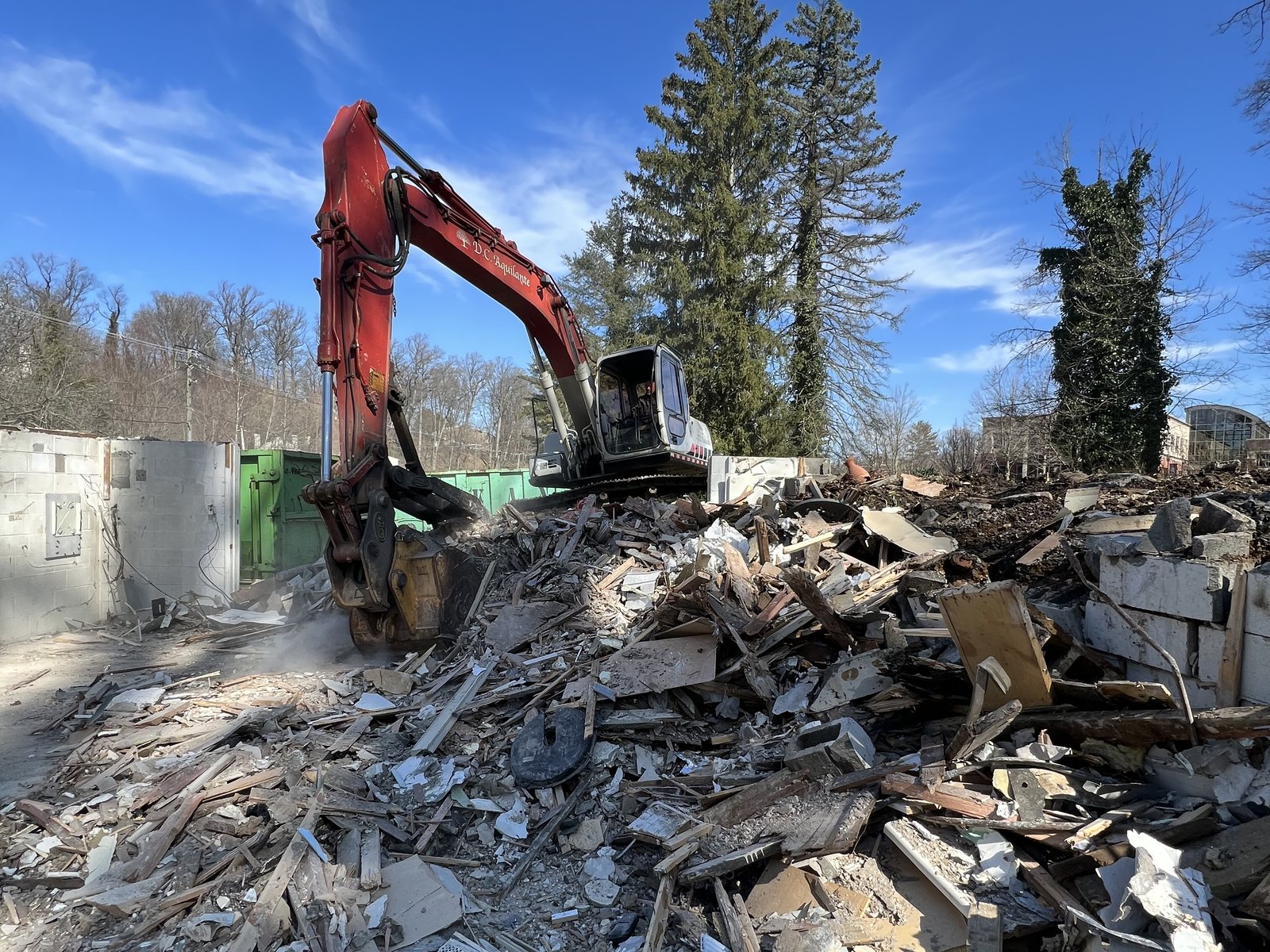
What we take down
From a slab to a full structure, with the site left ready for whatever comes next.
Buildings and structures
Commercial outbuildings, garages, sheds, barns and small structures, taken down in a controlled sequence with debris separated and hauled as we go.
Interior tear-outs
Strip-outs ahead of a tenant fit-out or renovation — partitions, ceilings, flooring and fixtures removed and hauled, with the space left broom-clean for the next trade.
Slabs, foundations and pads
Concrete slabs, foundations, footings, failed pads and old aprons broken out and removed, with the subgrade left ready for new work.
Pool removal
In-ground pools removed or properly filled, permitted where required, with the area compacted and finished to grade so it can be used rather than settling for years.
Selective demolition
Where only part of a structure comes down, or where something adjacent has to stay intact and undamaged.
Site clearing after demolition
Debris hauled, the area graded, and the site left at final grade rather than as a pile of rubble and a hole.
What has to happen before anything comes down
The part that decides the schedule.
Permits
Most demolition requires a permit from the municipality, and requirements vary by township. We coordinate the application and the inspections that go with it.
Utility disconnects
Gas, electric, water and sewer have to be properly disconnected and capped by the utility before demolition, and that lead time is usually the longest item on the schedule.
Survey for hazardous materials
Older structures may require asbestos or lead assessment before demolition. Where that applies we will tell you up front rather than discovering it mid-job.
Protection and containment
Adjacent buildings, occupied units, landscaping and paved areas protected, and dust and debris controlled — particularly on an occupied property.
Recent work
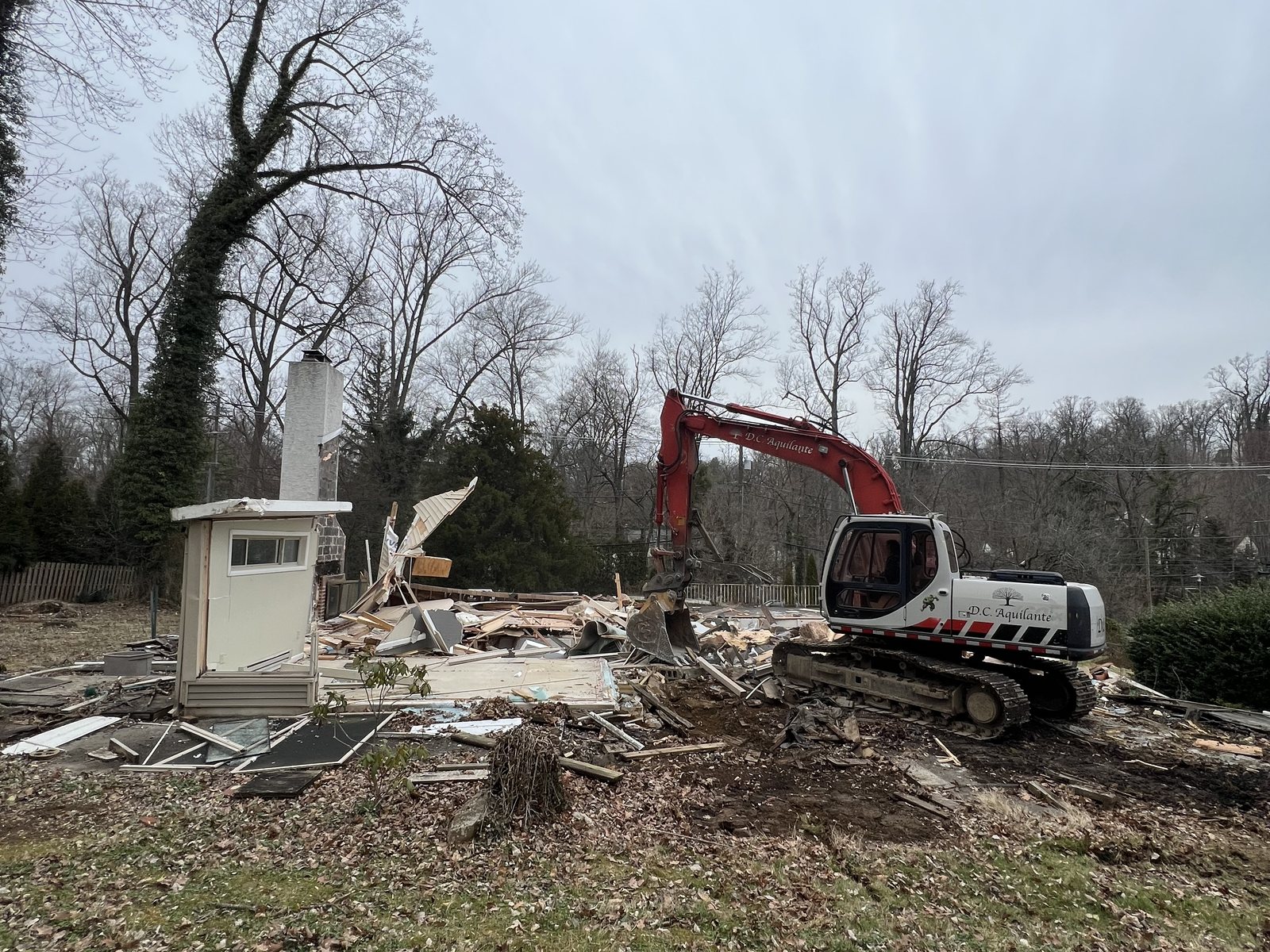
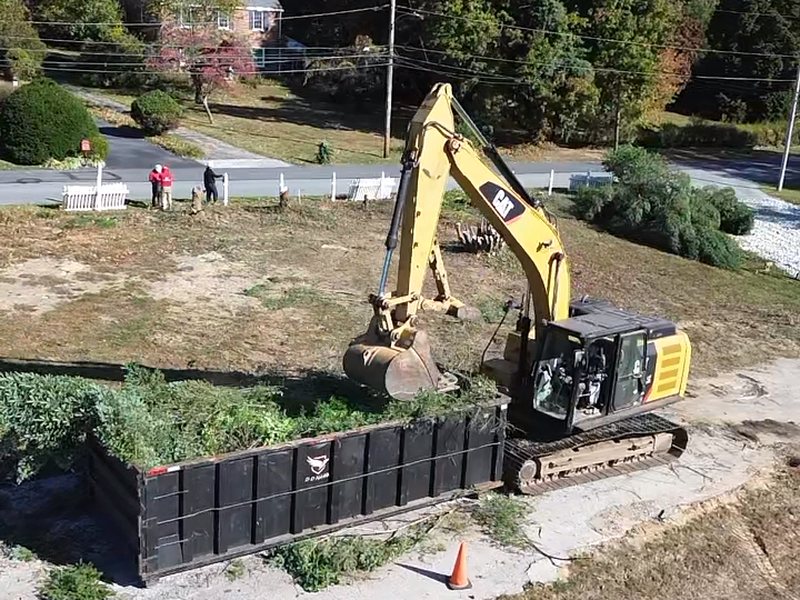
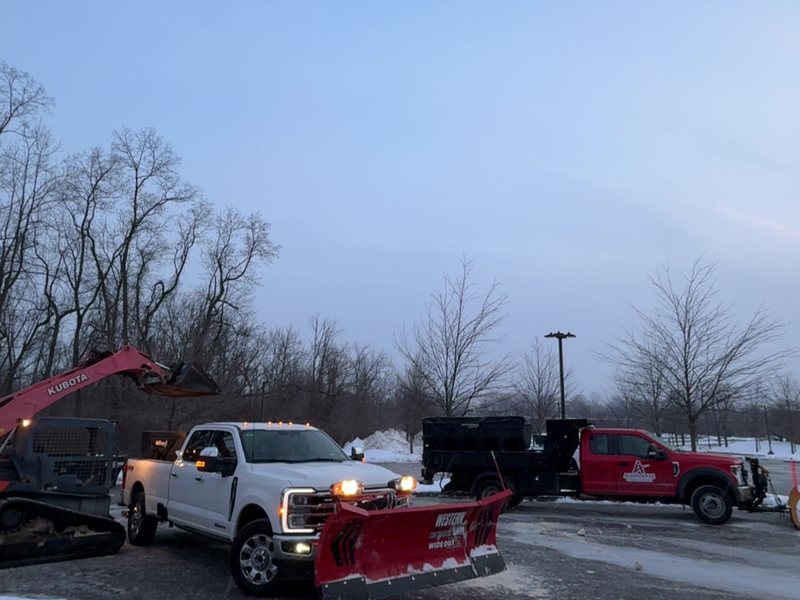
What it looks like.
A direct line to the owner
When it matters most, you're talking to me.
Not a dispatcher. Not an answering service that takes a message and gets back to you Monday. The number on this site reaches the owner — at two in the afternoon and at four in the morning during a snow event. If a tree comes down on your building, or a lot has to be clear before your doors open, you're talking to the person who can make the decision and send the crew.
- Answered 24/7 — snow events, storm damage and emergencies, any hour of any day.
- Decisions made on the call — nothing gets escalated to someone you have never met.
- One point of contact from the first site walk through the final invoice.
- I am on the job sites — not managing them from a desk three counties away.
— Mike Aquilante Jr., Owner
Common questions
Before you call
Do you handle permits and utility disconnects?
Yes, we coordinate both as part of the scope. Utility disconnects usually have the longest lead time on a demolition job — often several weeks — so the earlier we start that process the sooner the work can happen.
What happens to the debris?
It is separated where practical and hauled off site to the appropriate facility. Concrete, metal and general debris go to different places. Hauling and disposal are included in our number rather than added later.
Can you demolish part of a structure and leave the rest?
Yes. Selective demolition — taking down an addition, removing an interior structure, or opening up part of a building while keeping the rest intact — is common on commercial work. It takes more planning and more careful sequencing, and we price it accordingly.
What about asbestos or lead in an older building?
Older structures may require assessment before demolition, and where that applies it has to be handled by a licensed abatement contractor before we start. We will flag it during the walkthrough rather than discovering it partway through the job.
How is a pool removal finished?
Either full removal of the shell or a permitted partial fill, depending on what your municipality allows and what you want to do with the area afterward. Either way it gets backfilled in lifts and compacted, so the area does not settle into a depression over the next two years.
How long does a demolition take?
The demolition itself is usually days. The schedule is driven by permits and utility disconnects ahead of it, which can run several weeks. We will give you a realistic timeline with the quote, including the parts that are not in our control.
Service area
Working across Chester & Montgomery County.
Based in Oaks, PA and on job sites throughout the area every week.
Don't see your town? Call anyway — we cover most of the surrounding area, and we travel for multi-property work.
Get a number you can budget against.
Free written estimate, itemized, usually walked within 48 hours. No obligation and no pressure.