
Seasonal & per-event contracts · 24/7 response
Commercial snow and ice management.
Your lot has to be clear and safe before your doors open — not an hour after. We run seasonal and per-event contracts for commercial properties across Chester and Montgomery County, with our own trucks, our own crews and a plan written for your property before the first flake falls.
Why a snow contract goes wrong
Almost every failed snow contract fails the same three ways, and none of them are about the plowing itself.
The contractor is oversubscribed. They sold more properties than their trucks can service in a storm window, so somebody gets cleared at noon. Ask any contractor how many properties they hold and how many trucks they run. If they will not answer plainly, that is the answer.
Nobody documented the event. When a slip-and-fall claim arrives four months later, you need dates, times, areas serviced and materials applied. If your contractor cannot produce that, you are defending the claim with nothing. We log every event and send it to you.
The sidewalks were an afterthought. Lots get plowed because they are visible and fast. Walks take crews and time, and they are where people actually fall. Sidewalk service should be written into the contract, not assumed.
We are members of SIMA, the Snow & Ice Management Association — the industry body that sets the operating, safety and documentation standards for commercial snow and ice work. Membership is not a certificate you buy; it is where the practices we run on your property come from: trigger depths agreed in writing, service events logged, materials recorded, and a site plan built before the season instead of improvised during it.
What the contract covers
Plowing is the visible part. Most of what keeps a property open is the rest of it.
Plowing and lot clearing
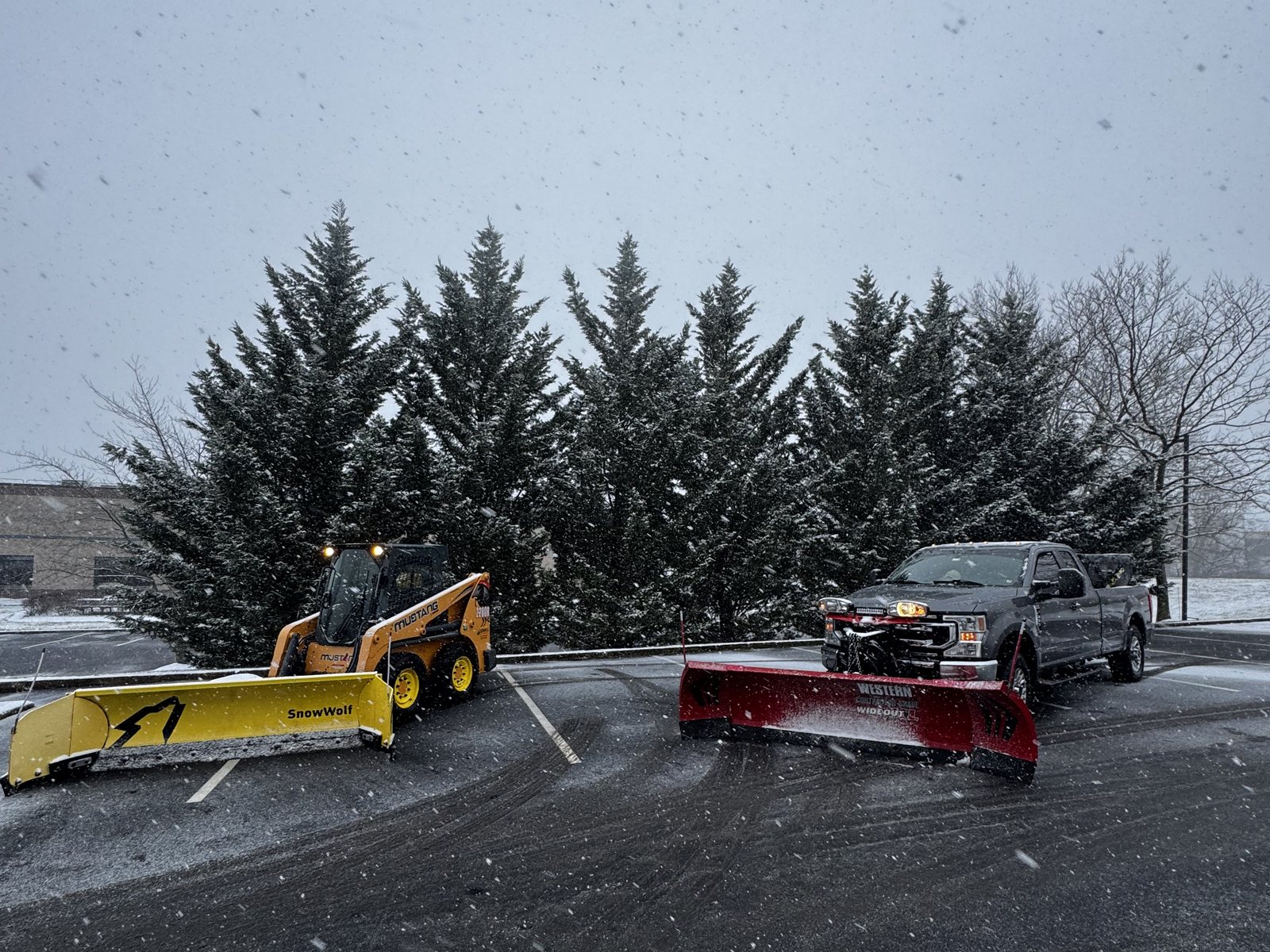
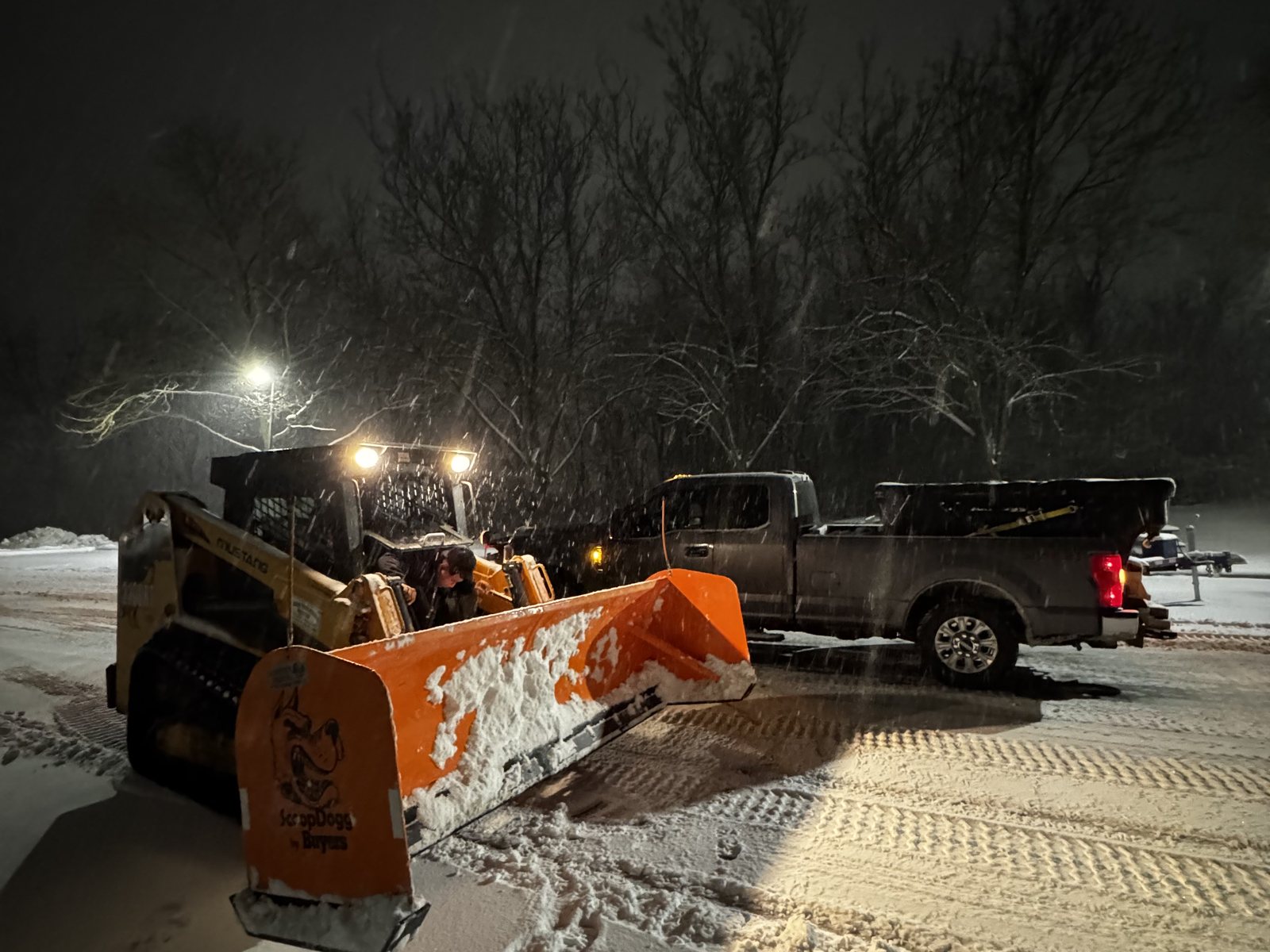
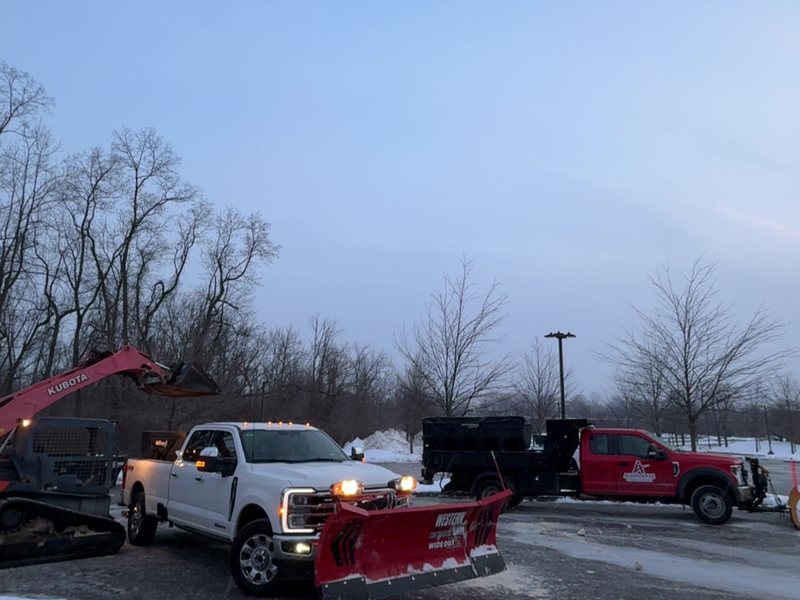
Trucks and skid-steer pushers sized to the lot. Big open lots get pushers; tight lots and drive aisles get trucks. Piles go where we planned them in the fall, not wherever the first operator decides at 3 a.m.
Salting and de-icing
Applied on a schedule tied to pavement temperature and precipitation type, not just after a plow. Refreeze after a sunny afternoon is what actually generates slip-and-fall claims.
Sidewalks and entrances
Walk crews clear entries, ADA routes and sidewalks by hand and with walk-behinds. This is where most properties get shorted, and it is the exact area a tenant or customer walks first.
Hauling
When piles run out of room or start blocking sightlines and parking, we load and haul them off site.
Monitoring
We watch the forecast and dispatch on it. You should not be the one deciding at 4 a.m. whether tonight is a plow night.
Before the season starts
The work that separates a smooth winter from a bad one happens in October.
Site walk and map
We walk the property, mark hydrants, islands, curbs, drains and anything that will disappear under snow, and stake what needs staking.
Pile placement plan
Where snow goes is decided in advance — away from drains, sightlines, ADA routes and the spaces you can least afford to lose.
Trigger depth agreed in writing
Most commercial contracts trigger between one and two inches. We set it with you so nobody is arguing mid-storm about whether tonight counted.
Priority order
If you have multiple properties or multiple entrances, we agree what gets cleared first before the season, not during it.
Recent work
What it looks like.

A direct line to the owner
When it matters most, you're talking to me.
Not a dispatcher. Not an answering service that takes a message and gets back to you Monday. The number on this site reaches the owner — at two in the afternoon and at four in the morning during a snow event. If a tree comes down on your building, or a lot has to be clear before your doors open, you're talking to the person who can make the decision and send the crew.
- Answered 24/7 — snow events, storm damage and emergencies, any hour of any day.
- Decisions made on the call — nothing gets escalated to someone you have never met.
- One point of contact from the first site walk through the final invoice.
- I am on the job sites — not managing them from a desk three counties away.
— Mike Aquilante Jr., Owner
Common questions
Before you call
What snow depth triggers service?
Most of our commercial contracts trigger at one to two inches, agreed in writing before the season. Zero-tolerance service, where the lot is kept clear continuously through an event, is available for properties that need it — typically medical, schools and 24-hour operations.
Do you offer seasonal contracts or per-event pricing?
Both. A seasonal contract is a fixed price for the winter regardless of how many events occur, which makes budgeting predictable and is what most property managers prefer. Per-event pricing bills each storm and suits properties with lower traffic or tighter budgets. We will tell you honestly which one fits your property.
When should we sign a snow contract?
September through October. By November the good contractors are committed and you are choosing from whoever has capacity left. Signing early also means we have time to walk the property and build a pile plan before the first storm.
Do you handle sidewalks and entrances, or just the lot?
Both, and we recommend contracting both together. Sidewalks, entryways and ADA routes are where slip-and-fall claims originate. Splitting them between two vendors is how they end up cleared at different times.
Do you provide documentation for our liability file?
Yes. Every service event is logged with date, time, areas serviced and materials applied, and sent to you. If a claim is ever filed against your property, that record is what you defend it with.
We already have a snow contractor. Is it worth talking?
Depends on whether they answer at 4 a.m. If your current arrangement works, keep it. If you spent last winter chasing someone, get a bid in September and compare. We also bid multi-property portfolios, which is usually where the pricing improves.
Service area
Working across Chester & Montgomery County.
Based in Oaks, PA and on job sites throughout the area every week.
Don't see your town? Call anyway — we cover most of the surrounding area, and we travel for multi-property work.
Get a number you can budget against.
Free written estimate, itemized, usually walked within 48 hours. No obligation and no pressure.