
Standing water · Erosion · Regrading · Site drainage
Grading, drainage and water management.
Almost every drainage complaint on a property is a grade problem wearing a disguise. Water goes where the ground sends it, and no pipe fixes ground that slopes the wrong way. We start by finding out where the water is actually coming from.
Why drainage fixes fail
Drainage is the category where property owners most often pay twice, because the first attempt treated the symptom.
A drain was installed with nowhere to discharge. Pipe has to go somewhere lower with a legitimate outlet. Installed without one, it fills with water, holds it under the lawn and the problem comes back looking the same.
The grade still slopes the wrong way. If the ground sends water at a building, adding a drain in the middle of that path intercepts some of it on a good day. Fix the grade and the drain often turns out to be unnecessary.
It was sized for a normal rain. Drainage that works most of the time and fails in the storms that actually cause damage has not solved anything. It should be sized for the events you care about.
Nobody looked upslope. Water arriving from an adjacent property, a road, or a roof three buildings over cannot be solved at the low point. It gets intercepted where it enters.
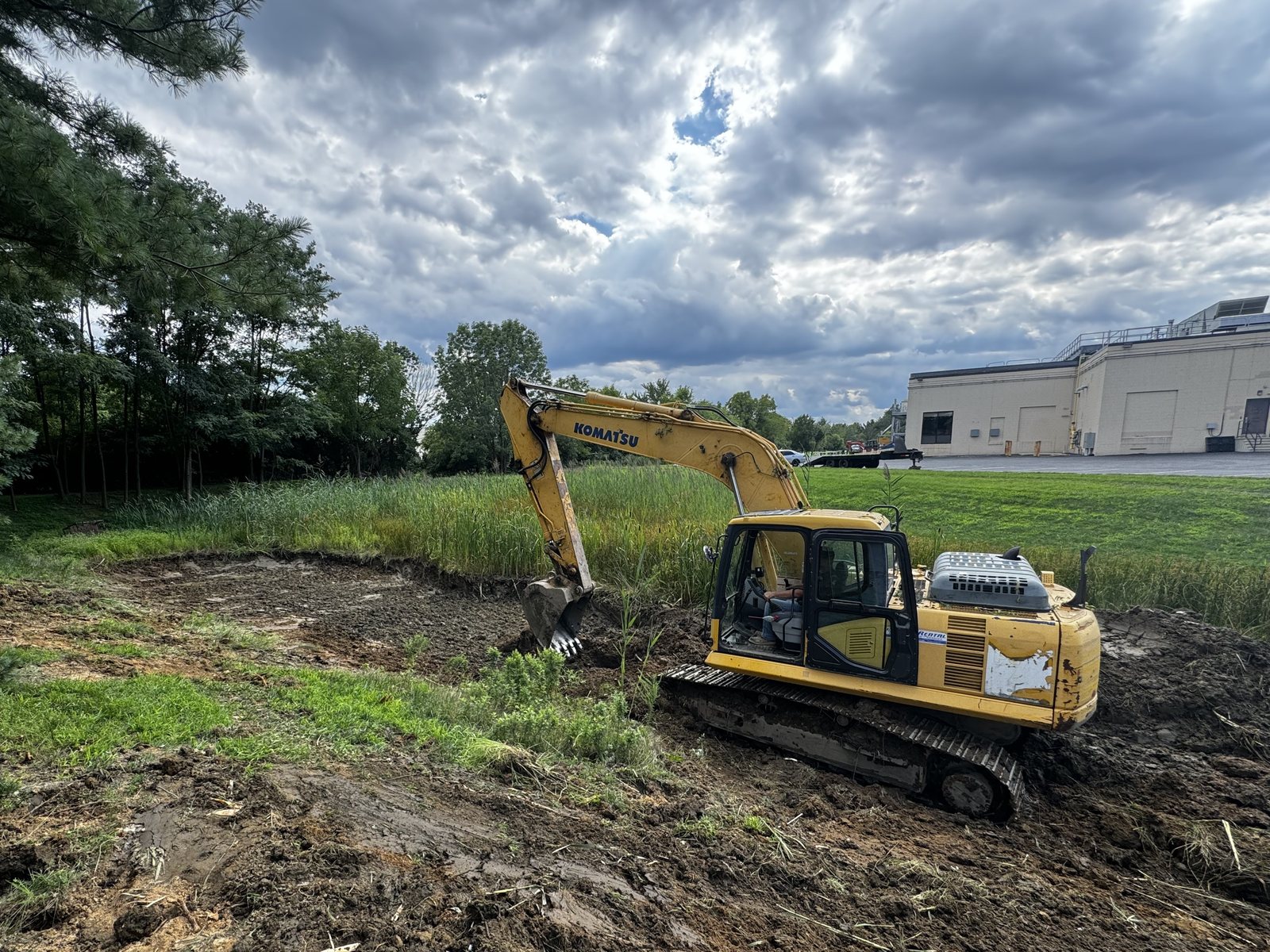
What we fix
The same handful of problems account for most of the calls.
Standing water in lots and lawns
Ponding that never dries out, in the same place after every rain. Usually a low spot with nowhere to go, and the fix is grade before it is pipe.
Water against buildings
Ground sloping toward a foundation instead of away from it. The most common cause of chronic moisture in a building, and the least expensive to fix from the outside.
Failed swales and drainage courses
Swales that have silted in, been graded over or been planted through, so the path water was designed to take no longer exists.
Downspout and roof discharge
Roof water dumped at the foundation, cutting channels through lawns and beds or freezing across a walkway. Piped and discharged where it belongs.
Erosion and washouts
Slopes losing material, channels cutting across a property, and areas where every storm moves soil somewhere you do not want it.
Site and lot regrading
Regrading yards, lots, courtyards and problem areas so surfaces actually shed water toward a designed outlet.
How we approach it
Diagnosis first. Installing pipe before understanding the water is how properties end up with three drains and the same problem.
Find the source
Where is the water coming from, how much is there, and is it surface water, roof water, or groundwater? Those need different solutions and get confused constantly.
Establish where it can go
Every drainage fix needs somewhere legitimate to discharge. If there is no outlet, the answer is grading and storage, not a pipe to nowhere.
Fix grade before adding pipe
Regrading solves more drainage problems than drainage products do, and it does not clog, collapse or need maintenance in ten years.
Then pipe what grade cannot handle
French drains, area drains, catch basins and solid pipe where they are genuinely the right tool — sized, sloped and outletted properly.
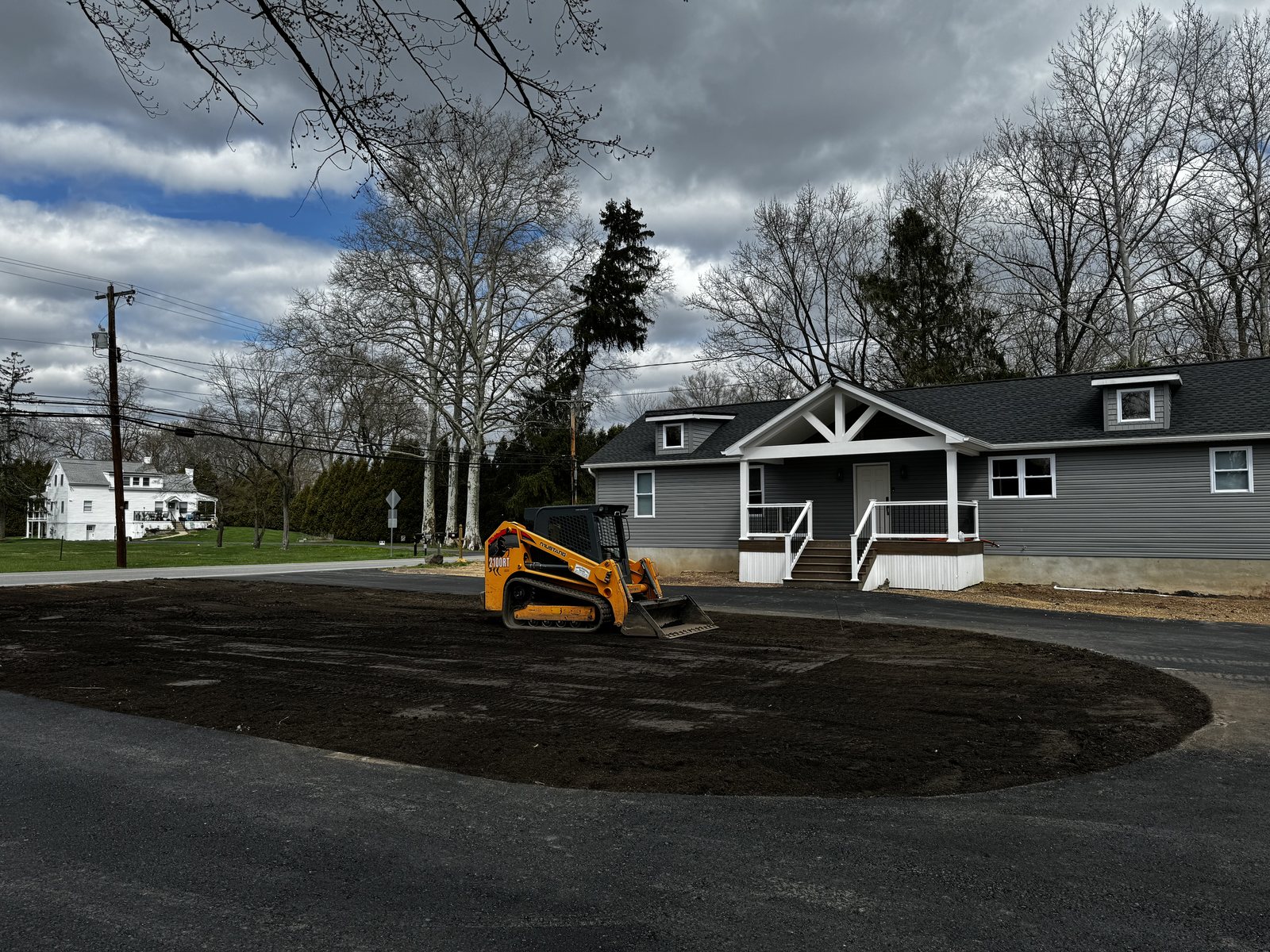
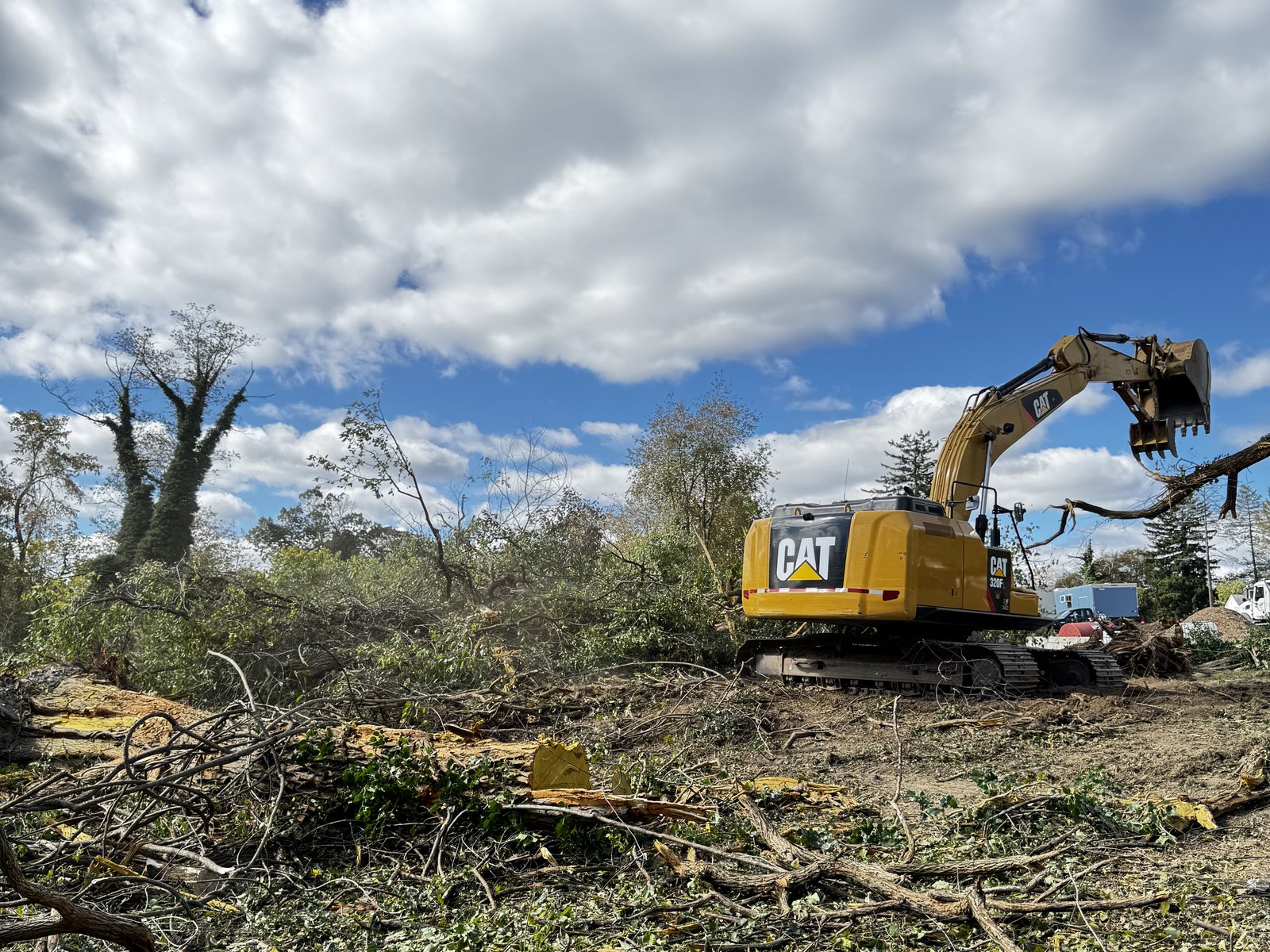
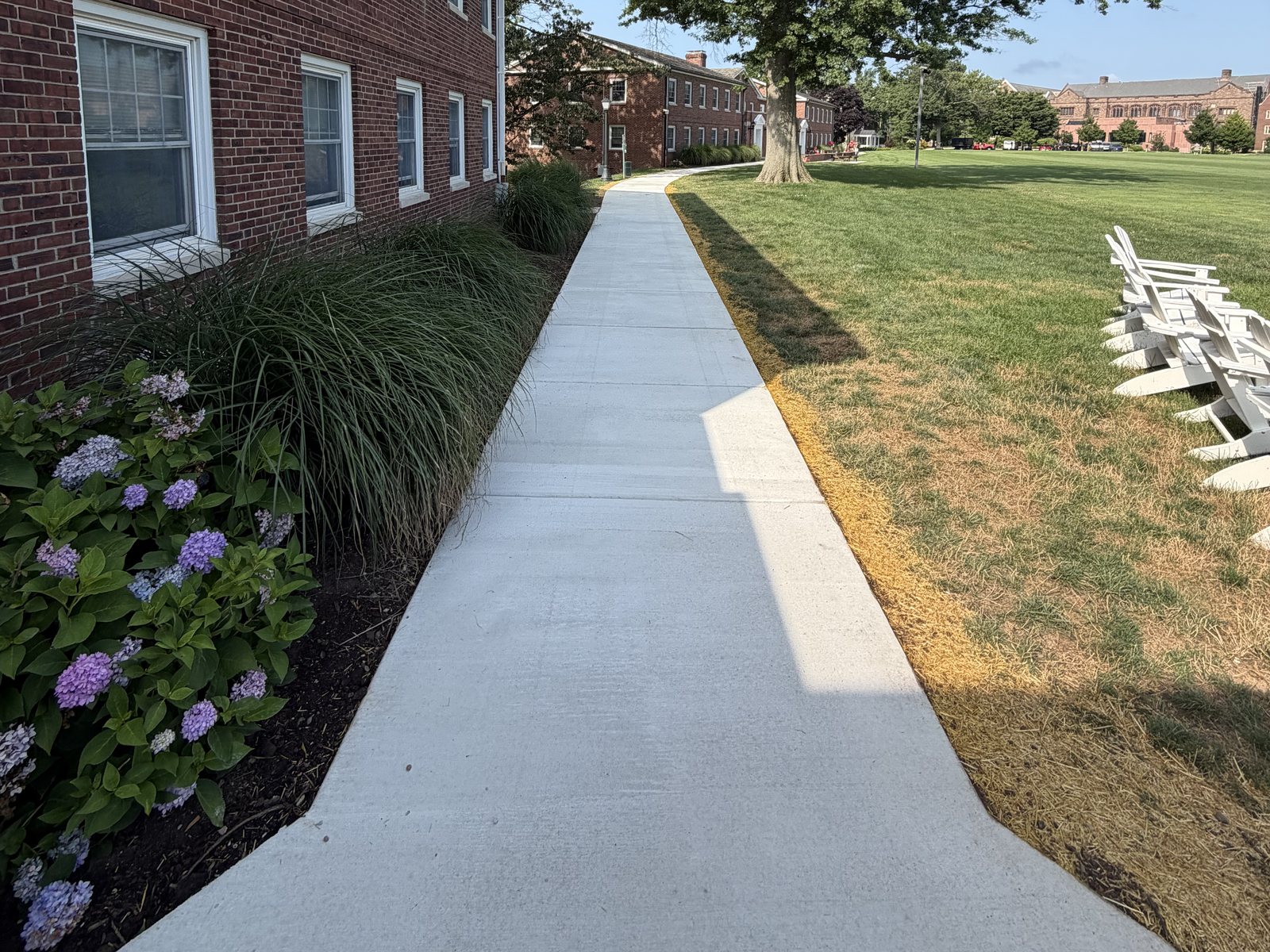
Recent work
What it looks like.
A direct line to the owner
When it matters most, you're talking to me.
Not a dispatcher. Not an answering service that takes a message and gets back to you Monday. The number on this site reaches the owner — at two in the afternoon and at four in the morning during a snow event. If a tree comes down on your building, or a lot has to be clear before your doors open, you're talking to the person who can make the decision and send the crew.
- Answered 24/7 — snow events, storm damage and emergencies, any hour of any day.
- Decisions made on the call — nothing gets escalated to someone you have never met.
- One point of contact from the first site walk through the final invoice.
- I am on the job sites — not managing them from a desk three counties away.
— Mike Aquilante Jr., Owner
Common questions
Before you call
Why do I have standing water in the same spot every time it rains?
Almost always because that spot is the low point and there is no path out of it. The fix is either regrading so the water sheds toward an outlet, or a properly outletted drain if the grade cannot be changed. A drain installed without an outlet will hold water rather than remove it.
Will a French drain fix water in my building?
Sometimes, but it is the second question, not the first. If the ground outside slopes toward the building, correcting that grade is cheaper, permanent and needs no maintenance. We look at grade, downspout discharge and where surface water is arriving from before recommending pipe.
Can you fix erosion on a slope?
Yes. Depending on severity that can mean regrading and stabilization, diverting the water causing it, or a retaining structure where the slope is too steep to hold. We will tell you which one the site actually needs.
Do you handle drainage on commercial lots?
Yes — ponding in parking areas, failed inlets, water crossing walkways and doorways, and regrading of lots and yards. On commercial property this is a liability item as much as a maintenance one, because ponding freezes.
Do you need to disturb the whole lawn or lot?
Usually not. Most drainage corrections are localized to the problem area and the route to the outlet. We will tell you at the walkthrough what has to be opened up and what gets restored afterward.
Is this something that needs a permit?
Sometimes. Work that alters stormwater flow, discharges to a public system or affects a regulated feature can require municipal approval. We will flag it if it applies to your site rather than finding out afterward.
Service area
Working across Chester & Montgomery County.
Based in Oaks, PA and on job sites throughout the area every week.
Don't see your town? Call anyway — we cover most of the surrounding area, and we travel for multi-property work.
Get a number you can budget against.
Free written estimate, itemized, usually walked within 48 hours. No obligation and no pressure.